Previous Post
- October 21, 2026
LIHTC Operating Expense Benchmarks: Find the Cost That Deserves a Second Look
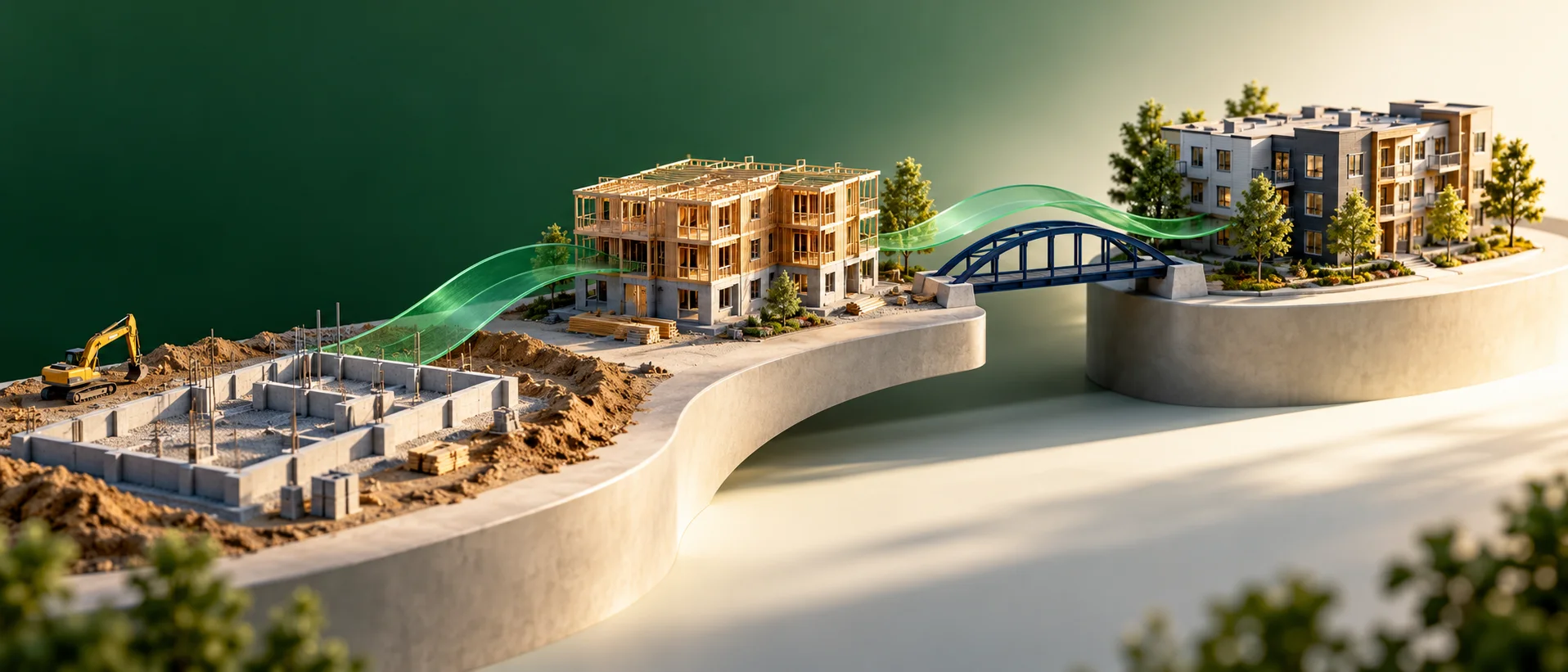
Conceptual illustration created for this article.
Your sources and uses can balance while your construction account runs short. The missing information is often the date each source becomes available. Equity arriving at conversion cannot pay an invoice that is due months earlier unless another source bridges the gap.
A LIHTC construction draw schedule puts the development budget on a calendar. It connects spending, funding arrivals, loan balances and interest so a team can test the financing plan before relying on a single interest-reserve allowance.
Start with when costs are expected to be paid, not only when they are incurred. Land, contractor draws, retainage, professional fees and capitalized reserves may follow different schedules. Mark the assumptions that come from a contract separately from those that are still estimates.
Then place the sources on the same calendar. Construction debt, sponsor cash, soft funds and investor equity can carry different release conditions. A nominal commitment amount tells you little about which month it will be usable.
| Funding item | Timing question |
|---|---|
| Investor equity | Which milestone releases each tranche? |
| Construction loan | What must be funded or satisfied before a draw? |
| Soft funding | Can it be used during construction or only later? |
| Retainage | When is withheld contractor compensation released? |
| Conversion | What conditions permit permanent closing? |
An interest reserve should be connected to the outstanding balance and the loan’s charging convention. Applying the annual rate to the full commitment for the entire construction period is a different assumption from charging interest as the loan is drawn. Neither should be hidden inside a generic percentage of hard costs.
EZFeasi’s construction schedule places uses in the months they are paid and sources in the months they arrive. The model draws the loan for the remaining need and calculates interest on the modeled balance. That interest feeds the development budget, making its relationship to the draw assumptions visible.
The OCC’s commercial real estate lending handbook provides lender-side context for construction funding and interest-reserve controls. Your actual loan agreement governs the disbursement conditions, available advance and interest calculation for your transaction.
Consider an illustrative timing test: $1 million of equity arrives three months later than the base case, and the construction loan carries that additional $1 million throughout those three months. At a simple 6% annual rate, three months of additional interest would be about $15,000 before compounding, fees, day-count differences and other draw changes. This is a simplified arithmetic example, not an EZFeasi result or a loan quote.
The larger issue may be the peak loan requirement rather than the interest alone. If the loan has insufficient availability, a delayed tranche can create a financing problem even when the permanent stack remains unchanged.
Compare at least two cases using the same project: the expected pay-in schedule and a delayed schedule tied to the milestone most likely to move. Read the peak financing need, modeled interest and closing position together. Recheck the lender’s conditions rather than assuming a later equity contribution can always be bridged.
A common modeling failure is to revise equity timing on one sheet while leaving construction interest fixed on another. Another is to adjust the budget’s interest line directly without preserving the draw assumptions that produced it. Both make it difficult for someone else to reproduce the result.
In EZFeasi’s Proforma, the Financing and Equity areas let you review the construction schedule alongside the equity pay-in. Work through the modeled sources, uses and interest before treating the funding gap as resolved.
The budget and the calendar should tell the same story. If a funding milestone is unresolved, retain that uncertainty in the scenario comparison instead of selecting the earliest possible date just to make the reserve smaller. The Investor schedules guide explains how to keep the contribution schedule distinct from tax-credit delivery and reserve movements.
A useful review ends with a question the lender, investor or funding agency can answer: can a tranche be released earlier, what conditions must be met, is bridge availability sufficient, or what happens if completion moves? Keep the responsible party and supporting document beside each answer.
The schedule is a planning model. Updating it should follow changes to the construction plan and financing commitments, rather than substitute for those commitments. It can help the team identify the month that needs attention before the cash shortfall arrives.
See the construction financing engine or book a walkthrough with your current sources, uses and pay-in assumptions. The goal is to understand what must happen, in what order, for the funding plan to work.
Use the applicable agency documents and funding-year requirements when evaluating a project.
Topic: